Industrial , Infrastructure
Western
Operations & Maintenance
Ghana Ports and Harbours Authority (GPHA)
16-12-2024 01:27:41
The Takoradi port features outdated infrastructure that does not match the vessel profiles of modern and future times and the cargo flows projected to be handled in the port. The ports of Tema and Takoradi are Ghana’s primary maritime gateways. The Port of Takoradi dates from 1928 and since then, the port’s assets have seen limited expansions and rehabilitation, although the economy and maritime trade has seen substantial growth and ship sizes have increased. As a result, there is a strong need to improve and expand port facilities to cater for todays and future trade. Furthermore, the profile of port operations has changed over time, due to containerization of trade, the advent of mining and connected bulk exports and with the discovery of offshore oil reserves and the related offshore supply services. These developments have changed the requirements of port capacity and in this light the port’s master plan is updated and the port infrastructure is being upgraded and expanded.
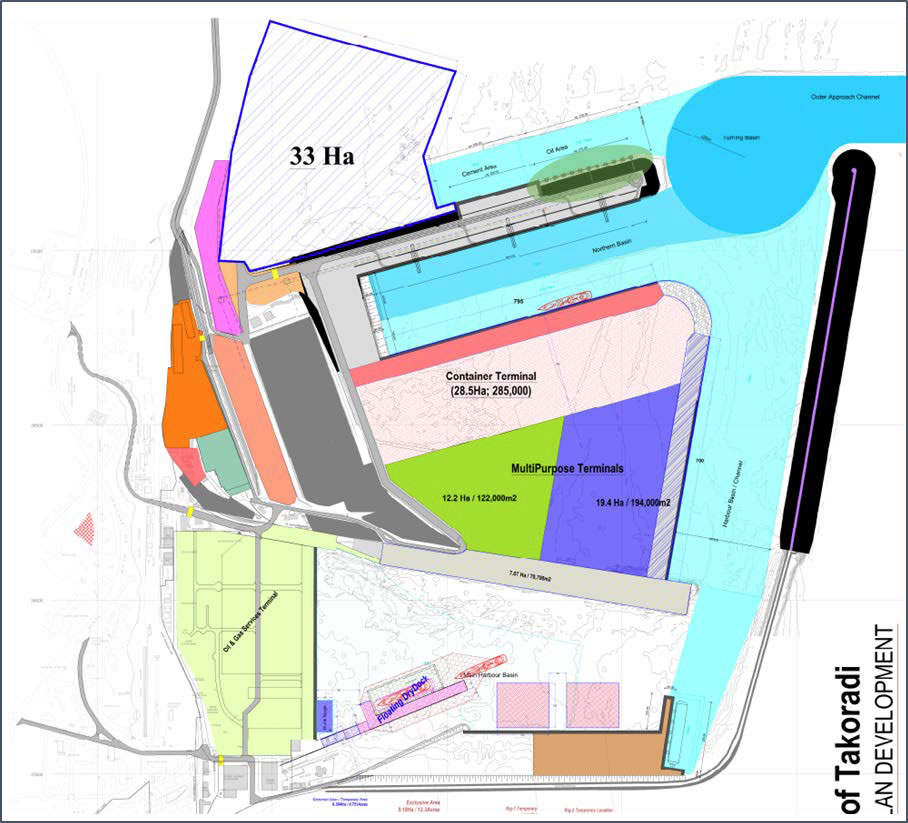
The port of Takoradi currently accommodates liquid bulk vessels at a jetty on the opposite side of berths 3-5 (where multi-purpose, OSB and container vessels are handled). The current operations feature the following operational bottlenecks: • there is a limited draft available at the terminal resulting in the need to call Takoradi with smaller vessels at a higher cost of transport; • there is no proper vessel handling facility for LPG which means that LPG is currently handled by lightering bigger LPG ships offshore, transferring LPG to the terminal and directly offloading into trucks; and, • there is a need to relocate the existing liquid bulk terminal based on the masterplan: the space currently used for liquid bulk handling will be part of the future multipurpose/container terminal.
The Updated Final Master Plan (dd 21/09/2015) has been established taking into account the physical conditions at the port, initial traffic projections and technical parameters. The master plan provides a phased development of the port to cater for the projected traffic up to the forecast horizon in 2035. In addition, in June 2016, a revised layout has been presented. Figure 3-1 shows this revised layout. The primary components of the master plan include:
The preferred PPP structure for the development, operation and maintenance of the Takoradi Liquid Bulk Terminal is a landlord type of concession. The landlord structure transfers all the operational responsibilities to the private terminal operator. GPHA is responsible for delivering the general port infrastructure such as breakwaters, access channels and a turning basin and for the basic infrastructure such as the jetty, the dredging works and demolition of the old (existing) liquid bulk jetty.
The Terminal Operator is responsible for the delivery of the superstructure and equipment such as the utilities, piping, handling equipment and installations. Compensation for the investments in general port infrastructure made by GPHA is paid by port users through port dues. The concessionaire is being compensated for its investments in superstructure and equipment by the terminal users (shipping lines) through the liquid bulk handling fees. As these handling fees are not sufficient to compensate the terminal operator for its investments, part of the port dues (44.2% based on the financial viability analysis) are allocated to the terminal operator. This means that in the currently envisaged PPP structure, there are no concession fees from the Terminal Operator to the GPHA. The terminal can be expanded with a second berth, subject to market demand. Related investments should be born by the concessionaire, as indicated in the next figure (orange block).
Information will be published as soon as it is available.
Information will be published as soon as it is available.
Information will be published as soon as it is available.
Information will be published as soon as it is available.